Micaceous Iron Oxide / Hematite
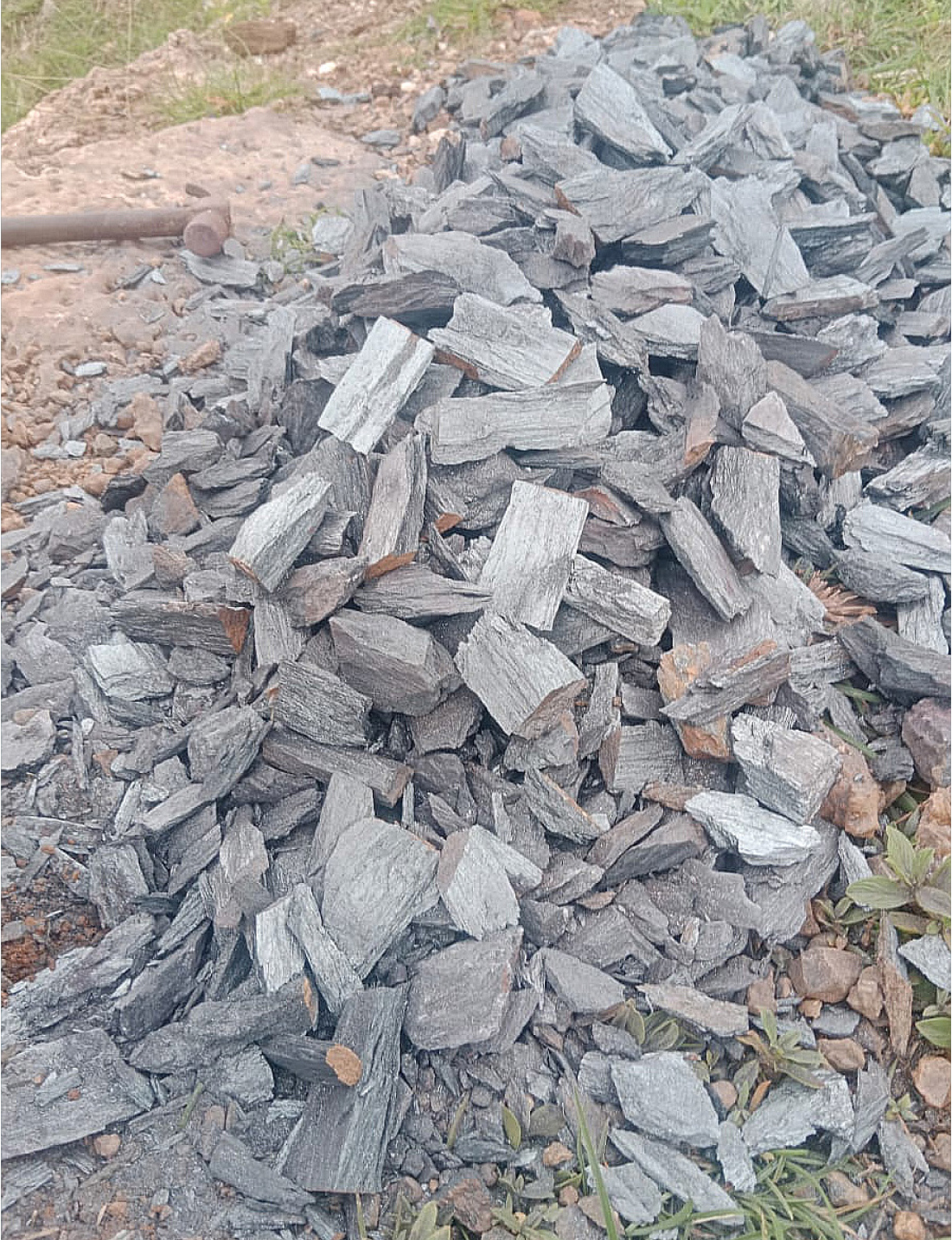
Micaceous Iron Oxide
/ Hematite
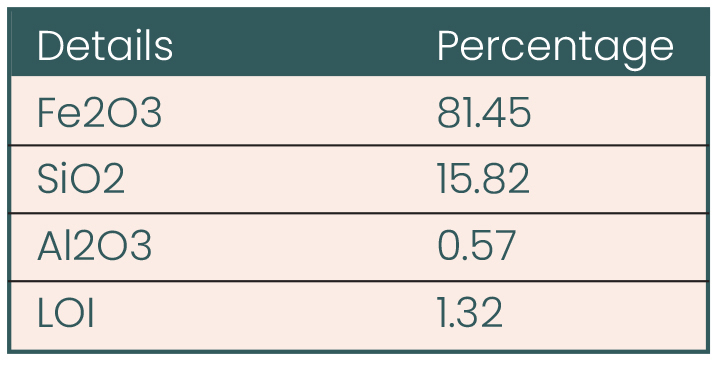
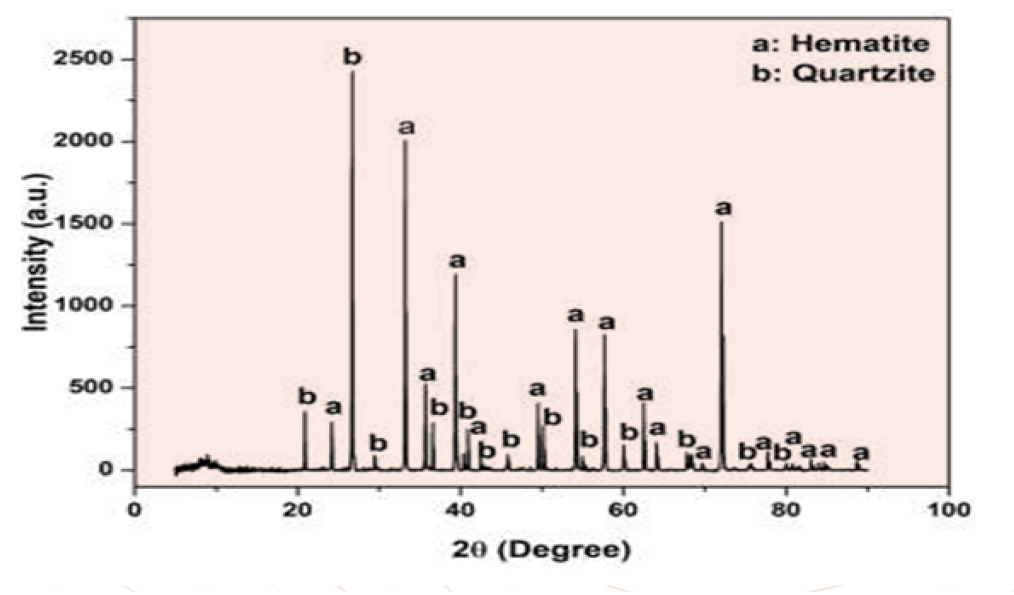
The mineralogical characterization of the provided hematite ore sample was carried out using XRD, optical microscopy, and FESEM techniques. The XRD results confirmed hematite as the predominant phase with minor quartz and trace alumina, consistent with the chemical composition of Fe₂O₃ (81.45%), SiO₂ (15.82%), and Al₂O₃ (0.57%).
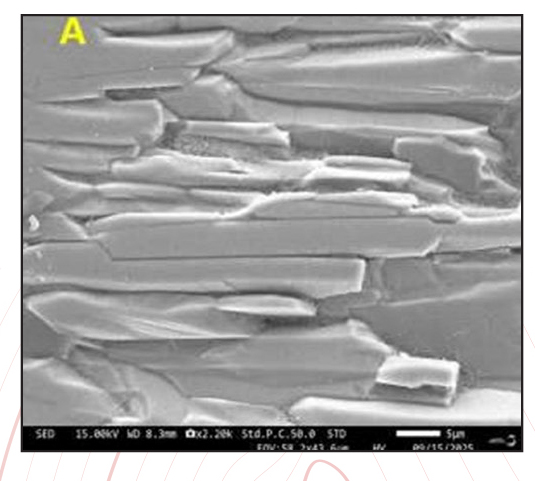
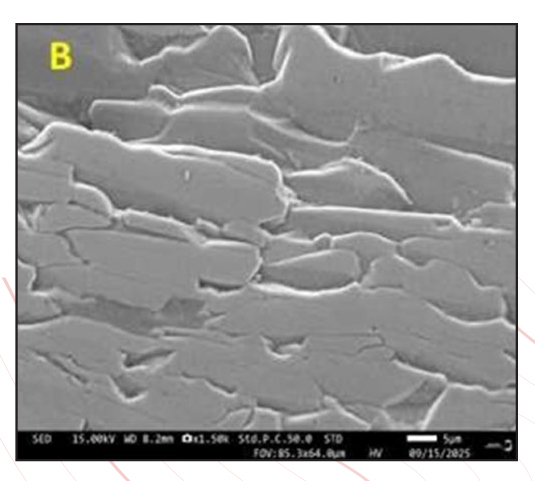
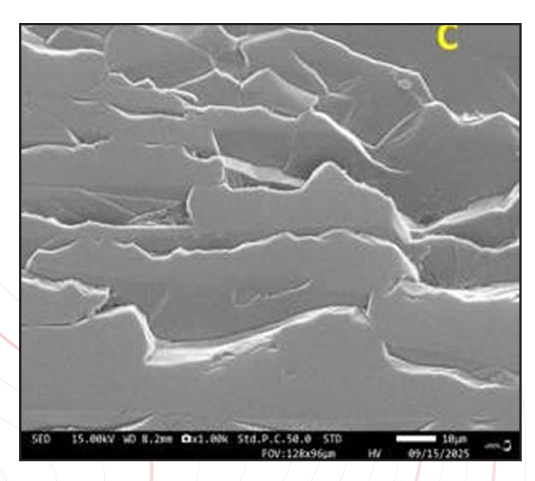
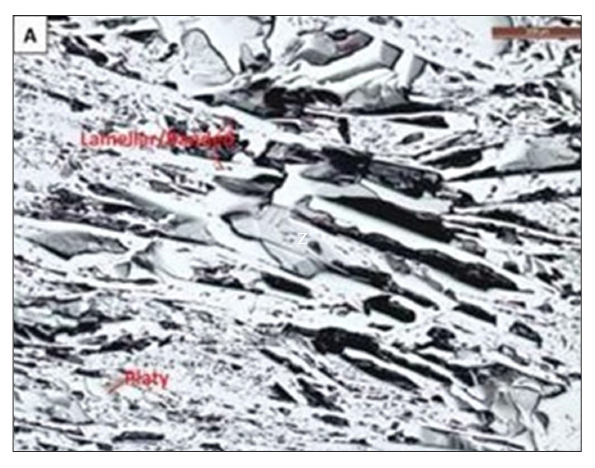
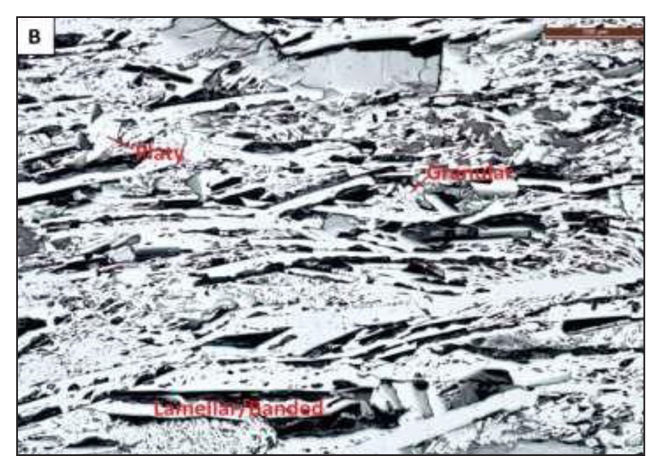
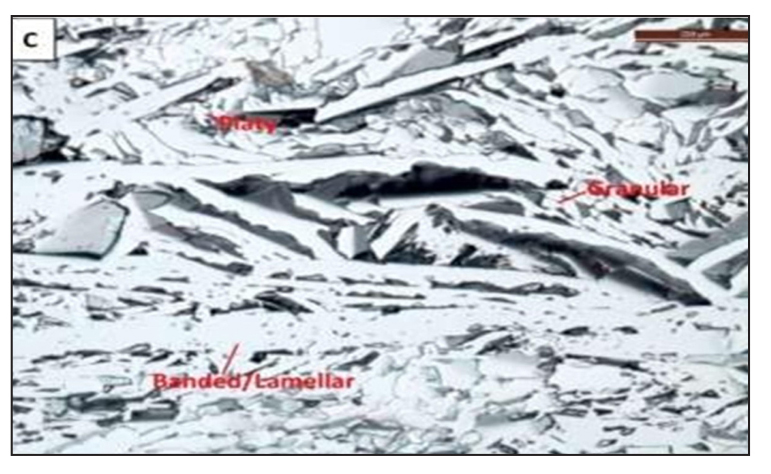
Optical microscopy revealed distinct lamellar textural features, while FESEM provided high-resolution confirmation of the microstructural characteristics. The hematite grains predominantly exhibit platy and tabular morphologies with alternating lamellar bands, reflecting depositional and post-depositional processes.
Quantitative assessment indicates that more than 96% of the ore matrix is composed of lamellar hematite structures, confirming the highly developed lamellar fabric of the sample. This fabric is critical for understanding ore genesis, beneficiation response, and industrial suitability.
i) X-Ray Diffraction (XRD) Analysis
The feed sample was crushed and ground for XRD analysis using a powder X-ray diffractometer (D8 ADVANCE, Bruker, Germany). The analysis confirms hematite and quartz as the major mineral phases associated with this ore.
| Details | Percentage |
|---|---|
| Fe₂O₃ | 81.45 |
| SiO₂ | 15.82 |
| Al₂O₃ | 0.57 |
| LOI | 1.32 |
ii) Optical Microscopy Study
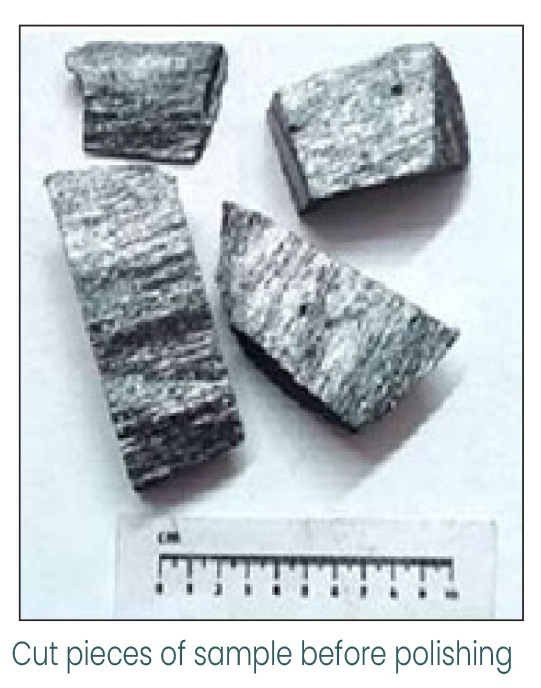
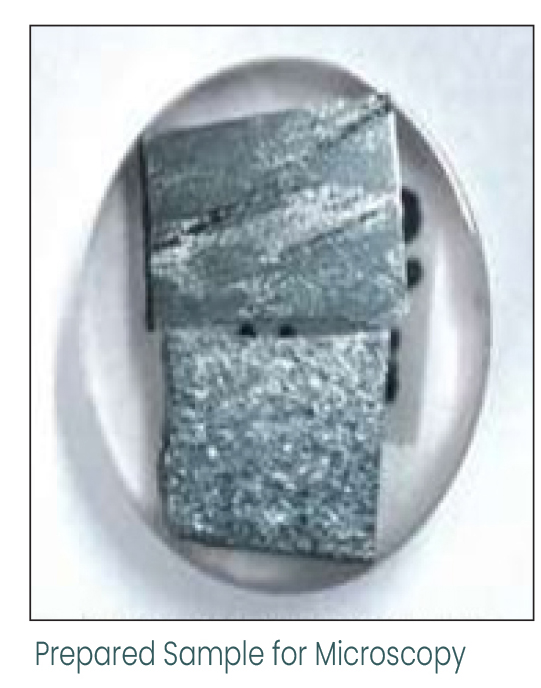
Polished sections were prepared for optical microscopy using standard cutting, mounting, grinding, and polishing techniques. Reflected light photomicrographs at different magnifications show lamellar hematite textures formed under varying deformation and depositional conditions.
iii) FESEM Study
FESEM analysis provided detailed insights into the microstructural features of hematite. Prominent lamellar structures expressed as alternating bands were observed, reflecting depositional and post-depositional origins. These features illustrate the interplay between sedimentary layering and structural deformation.